By Stephanie Shepard
•
October 26, 2026
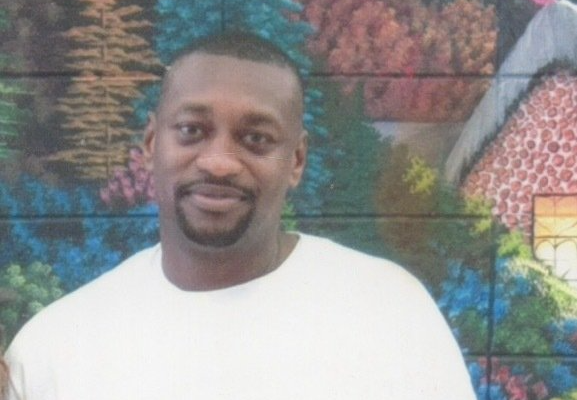
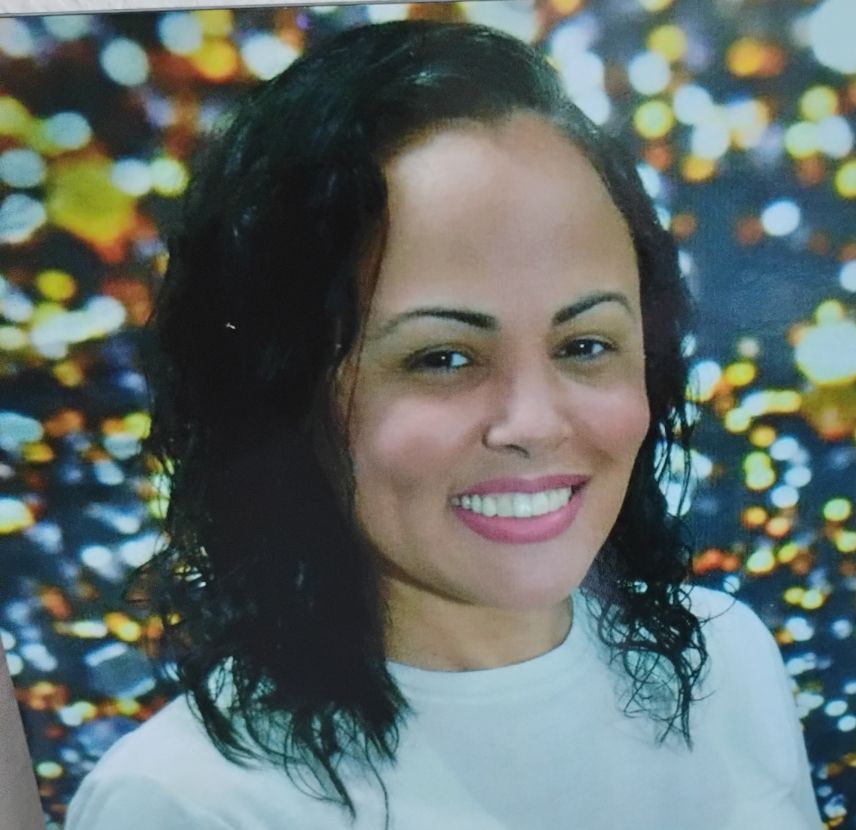
Parker Coleman should be thinking about what comes next. He should have been thinking about how he would celebrate his recent 41st birthday, spending time with his family, building a career, falling in love, making plans, and living the life that so many of us take for granted. Instead, Parker is still in prison. He has spent nearly his entire adult life behind bars, serving a 60-year federal sentence for a nonviolent cannabis conspiracy. He was in his early twenties when his life changed forever. Today, the plant at the center of his case is legal or decriminalized in much of the country, and a multibillion-dollar cannabis industry has grown around it. But Parker is still serving 60 years. And perhaps the hardest part is that every one of his codefendants has gone home. His codefendant, Corvain Cooper, received a pardon from President Trump in January 2021 after serving a life sentence. Another codefendant, Clyde "Monroe" Wilburn, spent 14 years as a fugitive before turning himself in. Within days, prosecutors moved to dismiss his indictment, and the same judge who sentenced Parker released Wilburn. Parker remains in prison. Still waiting. The Day Everything Changed Parker remembers the day his life changed with extraordinary clarity. He was at a car dealership picking up his car after repairs when federal agents came after him. "They jumped on the hood of my vehicle with guns," Parker recalled. "My mouth was busted from slamming against the steering wheel. I thought it was a robbery at first." When he tried to run, an ICE agent who had arrested him two weeks earlier on the same charges tripped him. The agent told him that if he made a phone call and cooperated, he would not have to go to prison. Parker refused. That decision, made in the back of a car behind a cafeteria off Independence Boulevard, would shape the next sixteen years of his life. A Family That Never Stopped Standing With Him For Parker, incarceration has never been something that affected only him. As his case moved forward, his codefendants began cooperating with prosecutors, including making statements about his younger sister and wearing a wire on his mother. At one point, Parker was faced with the possibility that his own mother could be indicted as prosecutors tried to pressure him into cooperating. He remembers telling her the news while he was being held at the Mecklenburg County Jail in Charlotte, North Carolina. Her response is something Parker has carried with him ever since. "Son, you know I love you to death," she told him. "Fight for your life. We're here with you. But what we will not support is you telling on others to get out of prison on account of my name. You choose to live a certain way. So you take what comes with that." It was one of the hardest conversations of his life. And it says a lot about the family Parker comes from. "I couldn't imagine the woman who birthed me sending me letters from prison to prison over ghost weed," he said. "That's just unfathomable." Sixteen Years of Moments He Can't Get Back The true cost of Parker's sentence is not measured in years alone. It is measured in birthdays. In family dinners missed. In relationships that never had the chance to grow. In watching the people you love get older through letters, phone calls, and photographs instead of being there beside them. Parker hasn't seen his parents in more than a decade because of their health issues. The last time he saw his niece, she was three years old. She turns thirteen next month. He has watched from behind prison walls as his parents moved through their forties and into their sixties. His grandmother, who he says wants nothing more than to see him have a child of his own, will turn 81 this year. And then there are the people he will never get back. Parker lost his Nana, an uncle, and an aunt while incarcerated. They were people who helped raise him while his father served overseas in the Marines. Those are the losses that don't show up on a sentencing document. When Parker was asked what prison has taken from him, his answer was simple: "Time and opportunity to be successful." He talked about the relationships he never had the chance to build: romantic relationships, business relationships, friendships. A life interrupted before it had a chance to fully begin. He Doesn't Call It Hope When asked how he has held onto hope after sixteen years in prison, Parker offered an answer that sounds surprising at first. "I hate hope," he said. "I don't hope for anything." For Parker, hope can feel like waiting for someone else to decide when your life gets to begin again. "Hope is cruel, basically pacifying an issue you know is not going to be okay," he explained. "In my reality, I know I'll be out soon. So I move with conviction toward that goal." That conviction has carried him through a level 7 maximum-security prison without allowing incarceration to define who he is. He has watched people around him lose themselves to the trauma of prison. "A lot of people, under my circumstances, have given up," he said. "They might be physically here, but they're gone mentally," Parker says he has fought to remain himself. "My mental strength hasn't allowed me to succumb to the trauma we see on an everyday basis. My morals and principles are still the same as before incarceration." A World That Changed Without Him Perhaps one of the most painful parts of Parker's story is the world he has watched change from inside his cell. The same cannabis plant that became the foundation of his sentence has become a legitimate business, a source of jobs, investment, and wealth. Companies built around cannabis are publicly traded. Entrepreneurs are building careers and businesses around an industry that did not exist in its current form when Parker was sentenced. He knows that world could have been his, too. "I probably would've been a part of one of those billion-dollar companies if I were free," Parker said. "I was doing my research thoroughly on government taxes and the parameters of the legal weed business before incarceration." Instead, he is still serving a 60-year sentence. And to people who legally purchase cannabis today, Parker has a message: "They could've been me at any given time, depending on their location in the United States." That is the part of Parker's story that is easy to miss when we talk about cannabis legalization only in terms of laws, markets, and tax revenue. There are people whose lives were permanently changed by the same prohibition that the country is now moving away from. Parker is one of them. What Parker Wants Us to Remember Parker has thought about what he would say to the judge who sentenced him. His words are not complicated. "All of us make mistakes. I haven't made 60 years' worth of mistakes." Then he asks a question that has stayed with him for years: "I could've been your son or grandson, and the chances you give your family, the amount of time you gave me, are a little close to none. So what did I do for you to throw away my life when violent offenders come in and out of prison every day, even for rape and senseless killings? What justifies my sentence?" It is a question about proportionality. But it is also a question about whether a person should be defined forever by the worst thing they have been convicted of. Parker does not believe his life should end where his sentence began. Parker Still Believes His Story Is Not Over After sixteen years, Parker could understandably believe that his story has already been written. He doesn't. He looks at what happened to his codefendants and sees evidence that change is possible. "I have full faith my story is by far not over," he said. When Parker comes home, his dreams are not extravagant. He wants to see his family. He wants the opportunity to build a life. He wants to be "the voice for people who can't speak for themselves." And he wants to take the support he has received from people who never stopped believing in him and pay it forward. "Freedom will mean everything to me," Parker said. "My whole existence is based on freedom, not a cage. I can't accomplish any of my dreams in a small bathroom known as a cell." After sixteen years, Parker is still waiting to find out what the rest of his life can look like. Parker's Story Is Not Over Parker's case is a reminder that the end of cannabis prohibition does not automatically mean freedom for the people who were imprisoned under it. His codefendants have been released or had their sentences changed. Parker remains behind bars, serving a 60-year sentence for a nonviolent cannabis offense. The world around him has changed dramatically. He has not. He is still a son. Still a grandson. Still an uncle. Still the person his family has loved all these years. Still someone with dreams for what his life could become. And still someone waiting for the opportunity to come home. Why This Work Matters Parker's story is why Last Prisoner Project exists. Our work is about people, not statistics. It is about knowing the names behind these sentences and refusing to let them disappear simply because the laws around cannabis have changed. It means working case by case to pursue clemency, commutations, compassionate release, and other pathways to freedom. It means supporting people and their families while they are incarcerated and helping people rebuild their lives when they come home. And it means continuing to tell these stories, not because Parker is a statistic, but because he is a person whose life is still unfolding. Every letter written, every petition filed, every law passed, every record cleared, and every person who stands with this work can move someone closer to freedom. Parker has spent sixteen years waiting. His story is far from over. Help Last Prisoner Project free every last cannabis prisoner. Learn more and support the work at Last Prisoner Project .