LPP, MPP, law enforcement and others call for the release of cannabis prisoners in light of Covid-19

Sarah Gersten • March 26, 2020

Washington, D.C. — The Last Prisoner Project and other organizations are urging law enforcement officials to dramatically curtail arrests for non-violent crimes, including ceasing arrests for cannabis offenses. In addition to curtailing arrests, the organizations are calling for officials to release or grant clemency to those incarcerated for cannabis offenses along with dramatically reducing the number of incarcerated non-violent prisoners, whether sentenced or un-sentenced.

The Marijuana Policy Project, Last Prisoner Project, Law Enforcement Action Partnership, Clergy for a New Drug Policy, Doctors for Cannabis Regulation, National Cannabis Industry Association, Students for Sensible Drug Policy , and National Organization for the Reform of Marijuana Laws (NORML) have sent a

Public health experts have warned that the coronavirus poses an extreme threat not only to inmates, but also to the staff that serve them, as well as to their families and communities. The conditions in prisons and jails, such as sharing small cells, going into crowded day rooms, and sleeping just feet away from toilets, are known to cause disease and infection to run rampant. Jails are already seeing a spike in confirmed COVID-19 cases. It has been

Another cause of concern is that asymptomatic individuals can spread the virus. As a consequence, each law enforcement-civilian interaction includes a risk of transmitting the novel coronavirus to either party. According to

In addition to New York, law enforcement officers have tested positive for the virus in at least 14 other states, including California, Connecticut, Florida, Georgia, Illinois, Louisiana, Maryland, Massachusetts, Michigan, New Jersey, Ohio, Pennsylvania, Tennessee, and Virginia.

U.S. Immigrations and Customs Enforcement and several law enforcement agencies, including in Pennsylvania and Ohio, are already taking action to curtail arrests for non-violent offenses until the country is better able to prevent the spread of the coronavirus. 

,, Statement from Sarah Gersten, executive director and general counsel at the Last Prisoner Project: , “Our constituents, many of whom are over the age of 60 and have underlying health conditions, are imprisoned because of a plant that has now been deemed an ‘essential’ service by jurisdictions across the country during this time of crisis. Releasing cannabis prisoners now is not only the right thing to do from a justice perspective, but also from a public health perspective.” 

Statement from Steve Hawkins, executive director at the Marijuana Policy Project: “There is no justification for arresting and jailiing individuals for marijuana offenses during this crisis. It is in the best interest of law enforcement and the greater population to cease marijuana arrests and reduce arrests for non-violent crimes. It is also vital for individuals who are incarcerated for cannabis offenses to be released or granted clemency in order to prevent a potentially disastrous and deathly situation.” 

Statement from Police Major Neill Franklin (Ret.), executive director at the Law Enforcement Action Partnership: “COVID-19 is forcing us to seriously consider what constitutes a genuine public safety threat. Criminalizing people for marijuana has always been a waste of time and resources; now it's also unnecessarily endangering lives by exposing more people to the crowded and unsanitary conditions of our jails and prisons.”

###

To donate to Last Prisoner Project's emergency relief fund go

By Mary Bailey May 18, 2026
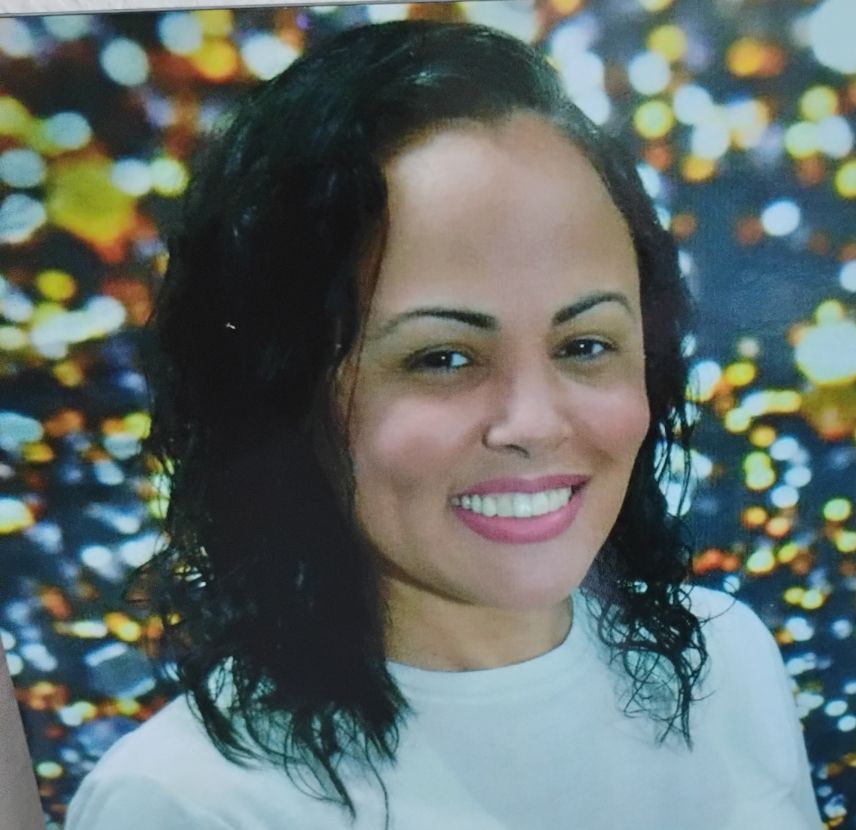
A Mother Still Behind Bars for Cannabis: The Story of Brandy Fisher While legalization spreads across America, women like Brandy Fisher remain forgotten inside federal prison — serving out decade-long sentences for marijuana as the world outside changes without them. How It Began Brandy Fisher never imagined she would spend a decade in federal prison. Charged with distribution of 1,000 kilograms of marijuana, she became a target when family members and close friends she trusted were already working as federal informants — six of them. When agents approached her first and asked if she wanted to talk, she asked for a lawyer. That decision, the right one under any standard, did not protect her from what came next. “The 6 informants who were close family and whom I thought were best friends had turned federal agents,” Brandy recalls. She took a plea deal — ten years under Rule 11(c)(1)(C), a binding agreement that locks the sentence in place regardless of changes in law. And the law has changed dramatically. “Sitting back and watching the world change daily is amazing — how now the world can see that marijuana can be used to cure people of sicknesses.” — Brandy Fisher As state after state has legalized or decriminalized cannabis, and as federal reform conversations have grown louder, Brandy remains locked in. Her binding plea means no retroactive relief applies to her. She watches from inside, and she waits. While Brandy serves her sentence, her family carries the weight too. Her father has received a family support grant from the Last Prisoner Project to help offset the costs of caring for Brandy’s six-year-old son. And when Brandy is eventually released, she will be eligible for a Last Prisoner Project reentry grant — funding designed to help cannabis prisoners like her rebuild their lives from the ground up. Life at FCI Waseca Brandy first survived FCI Dublin — the California federal prison that became the subject of a federal investigation into widespread staff sexual abuse. She was transferred to FCI Waseca in Minnesota, which she describes as one of the worst women’s federal prisons in the country. The conditions she describes are a portrait of institutional neglect. The commissary is shut down for weeks at a time. The kitchen served her food with a live beetle on the tray — she no longer eats there. Women are denied body oils because, as Brandy recounts, the staff claim it draws unwanted attention from male officers. A captain reportedly declared that commissary soda was being removed because women there were overweight. Cleaning supplies — bleach, Ajax — are withheld, yet women are asked to clean bathrooms that handle used sanitary products, sometimes without gloves. An outbreak of H. pylori, a bacterial infection that can lead to stomach cancer if untreated, has affected a significant portion of the population. “They are trying to keep it on the low,” Brandy says. “We are run around by majority men officers — there are unpleasant comments made about women and their sexual body parts, comments about the way our clothes fit.” — Brandy Fisher The harassment, she says, is daily and institutional. The message from staff is clear: the needs and dignity of the women housed there are not a priority. Safety, Mental Health, and a Six-Year-Old Boy Brandy shares her room with three individuals convicted of serious child sex offenses carrying sentences of 25 or more years, as well as others convicted of drug offenses and one convicted of murder. The federal system houses people across these vastly different profiles together, and any refusal to comply with the arrangement risks placement in the Special Housing Unit — solitary confinement. For Brandy, the psychological weight is not abstract. She has a six-year-old son on the outside, being raised by his 80-year-old great-grandfather. Every night, she falls asleep thinking about child predators — the ones inside, and the ones who may be near her child. Mental health support at Waseca is, by her account, almost nonexistent. There is one mental health staff member. “I will not call her a doctor,” Brandy says, “because when she talks to you, she is angry herself and she doesn’t give good advice.” When Brandy first arrived at FCI Dublin, she was immediately stripped of all mental health medications she had been taking for four years. No taper. No transition. No plan. What Clemency Would Mean Brandy is currently pursuing clemency with legal support from the Last Prisoner Project. For her, release is not the end of the story — it is the beginning of one she has been carefully building in her mind, and on the page, for six years. She wants to return to real estate: flipping and staging homes, putting them back on the market. She is also planning a nonprofit bookstore dedicated to donating reading materials to federal prisons nationwide. Over the past year alone, she has read more than 200 books. It has changed her. “Reading gives me hope, and it makes my time fly by. I want to help feed the minds of others with learning materials, love stories, action-packed books — and let’s not forget the hood books that keep us all on edge.” — Brandy Fisher She points out that in six years, not a single author of the many book series her family has ordered for her has ever donated books to FCI Waseca or FCI Dublin. She intends to be the person who changes that. Brandy Fisher is not asking for pity. She is asking to be seen — and asking those with the power to grant clemency to consider what second chances are for, and who deserves them. Write to Brandy — Let Her Know She Hasn’t Been Forgotten One of the hardest parts of incarceration is feeling invisible. A letter from a stranger can be a lifeline. If Brandy’s story has moved you, take five minutes to write to her directly. Tell her you read her story. Tell her she matters. Tell her people on the outside are fighting for her. Brandy Fisher 47495-509 FCI Waseca P.O. Box 1731 Waseca, MN 56093 You also have the option to write your letter to Brandy on the Last Prisoner Project website, and we will print and mail it for you: https://www.lastprisonerproject.org/letter-writing Support the Last Prisoner Project Brandy’s family support grant, her legal advocacy, and her reentry grant when she is released — all of it is made possible by donors like you. Last Prisoner Project works every day to free cannabis prisoners, support their families while they are inside, and help them rebuild when they come home. To keep doing this work, we need your support. Donate here .
By Mary Bailey May 4, 2026
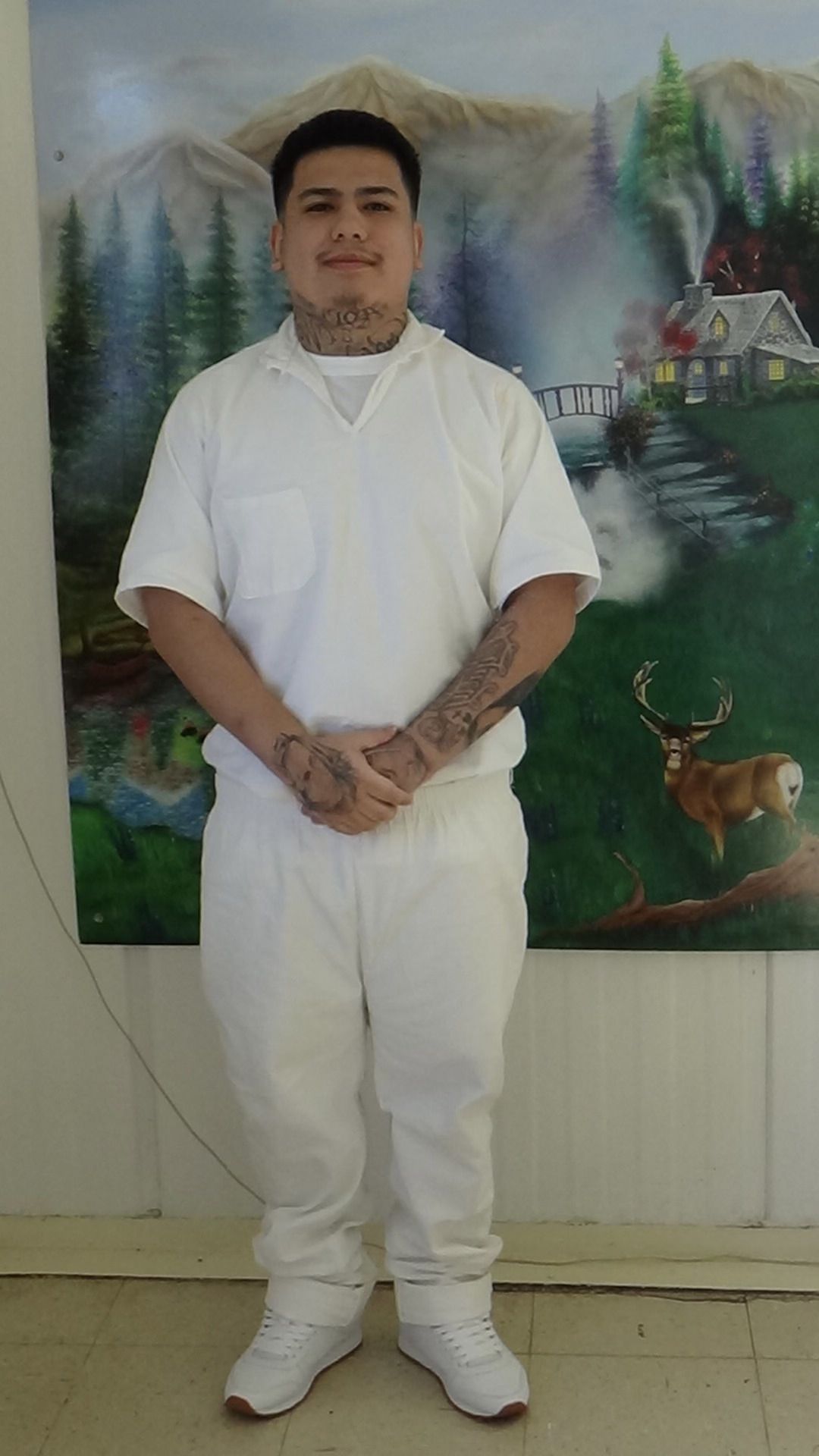
75 Years for Cannabis: The Story of Julian Andrade Julian Andrade is 22 years old. He was born and raised in Fort Worth, Texas, and he has now spent three of those years inside a prison cell, serving a 75-year sentence for a nonviolent cannabis charge. He also received concurrent terms of 50 and 10 years. No one was hurt. No violence was involved. Just a young man from Fort Worth, still maturing, whose life was upended by a system that chose punishment over proportion. Julian is a father. His son was born while he was incarcerated, a milestone he could not share, a childhood he cannot witness in person. His aunt stands firmly by his side, advocating for him and helping make sure his story gets told. Together, they are determined that what happened to Julian will not stay silent. This is his story, in his own words. A Fast Life and Bigger Dreams Before his arrest, Julian was someone who poured his time into the people he loved. "Before incarceration, I would spend any and all time that I could with my family and loved ones," he says. Underneath that, he carried real ambition. His goals were not small. He wanted to open businesses and bring others along with him, to create something and share it. "The path I thought I was on at 19 was a fast life that I did not know how to get out of." It's a sentence worth sitting with. A teenager who wanted to build something, who wanted to lift people up, caught in circumstances he didn't yet have the tools to escape. That kind of nuance rarely makes it into a courtroom. Shock, Confusion, and a Quiet Resolve When the verdict came down, Julian didn't rage. He went quiet. "I was in shock, loss of words, hurt, but mainly confused. I didn't hurt anyone. It was only cannabis." The confusion is understandable. Cannabis is now legal or decriminalized in the majority of U.S. states. The substance at the center of Julian's case is sold openly in dispensaries across the country. And yet, in Texas, a 19-year-old received a sentence longer than most people's entire lives. Julian has refused to let that sentence hollow him out. Since coming to prison, he says he has grown closer to God and encourages others to do the same. He uses the time to mature and to become a better man, not just for the people waiting for him on the outside, but for himself. "Since receiving my time, my perspective has changed completely. I now use this time to mature, grow, and become a better man for my family, friends, and my release, but most importantly myself." A Father Behind Bars Julian's son came into the world while Julian was incarcerated. There was no hospital room, no first cry he could hear, no hand to hold. There is only the wondering. "I miss my son daily. It hurts me knowing I can't help or even watch him grow up. I'm always wondering what he is doing, what kind of kid he is, and what he likes. Hoping one day I can do the same things with him that my grandpa did with me." That last line carries everything. A grandfather's love, passed down through memory, now at risk of being cut off by a sentence for a plant. Julian's son is growing up without his father. Julian is getting older without being able to watch his child grow. "My child means the world to me." The Daily Weight Ask Julian what his hardest challenges are, and his answers are not about prison conditions or legal policy in the abstract. They are deeply personal. "The biggest challenge I face daily is missing home. Hoping I'm free before my grandpa or mom passes. Being able to still be in my child's younger years. And enjoying life in the free world while I'm still young." He is racing against time on every front, against grief, against his son's fleeting childhood, against his own youth passing inside a cell. And yet something keeps him going. "The world is changing. But mainly dreaming about the things I will do and the life I want to live upon my release." He means it literally, too. Julian says he looks forward to pumping gas, walking through a grocery store, and one day helping others who find themselves in situations like his. The smallest freedoms, the ones most people never think about, are the ones he dreams about most. What Julian Wants You to Know If Julian could speak to lawmakers, advocates, and everyday people, he would not ask for sympathy. He would ask for honesty. "I know what I did. I broke the law. But I don't think people like myself or others should be serving long sentences, especially for something nonviolent or accepted in more than half of America and other parts of the world. I was still a kid when I came to prison. I was still growing up and maturing, and still am today. I didn't hurt anyone, never did, and never will. I don't deserve all this time. I understand I and others have broken the law, but we should not be doing more than 5 years for a plant." His aunt echoes that call. She has stood by Julian since the beginning, advocating loudly and consistently, refusing to let the system's silence become the final word on her nephew's life. Her support is a reminder that behind every incarcerated person is a family fighting to bring them home. Julian hopes that one day he will be able to share his testimony from the outside, to stand in front of others who are struggling and tell them there is a way through. That vision is part of what keeps him moving forward. The Door to Clemency Is Almost Sealed Shut Julian would like to pursue a sentence commutation, but Texas makes that road extraordinarily difficult. And even the path to clemency is nearly out of reach. Texas requires a written recommendation from a majority of the current trial officials, the present prosecuting attorney, the judge, and the sheriff or chief of police of the arresting agency from the county and court of offense, conviction, and release, along with full compliance with the board rules governing commutation of sentence, just to be eligible to apply. The very system that locked Julian up is the same one he'd need permission from to get out. His aunt has stood by him every step of the way, fighting to make sure his story is heard. Now we're helping make sure it is. A System Out of Step Julian's case is a stark illustration of how dramatically cannabis sentencing diverges across state lines. In one state, a person can legally purchase the same substance that earned Julian 75 years in Texas. That disparity is not justice. It is geography. Julian did not commit a violent crime. He was a teenager from Fort Worth who made choices in a life he didn't yet know how to navigate. He is now 22, a man and a father, spending what should be some of the freest years of his life behind bars. The question is not whether Julian broke a law. The question is whether this punishment fits any honest definition of justice. We believe it does not. "I hope what happened to me and others like me stops happening." So do we, Julian. Julian Andrade is a constituent represented by the Last Prisoner Project. If his story moved you, please take action. Contact your representatives, support cannabis sentencing reform, and consider donating to Last Prisoner Project so that we can continue to fight for the freedom of cannabis prisoners like Julian.
By Mary Bailey May 4, 2026
Yasquasia Delcarmen is 29 years old. She is a mother, a musician, and an aspiring screenwriter. She was building a life — pursuing a creative career, studying communications and journalism, and raising her infant son — when a federal sentence of 8 years, followed by 3 years of probation, brought everything to a halt. She has now served 16 months. No one was hurt. No violence was involved. Her charges were for cannabis — a plant medicine that brings quality of life to millions of people — now legal or decriminalized across most of the country, yet still capable of costing a young woman nearly a decade of her life and separating a mother from her child. Yasquasia is telling her story because she hopes it will make a difference. She hopes it will matter soon. This is her story, in her own words. A Creative Life, Cut Short Before her arrest, Yasquasia was in motion. She had been pursuing a career as a music artist for years — real opportunities, real momentum — and studying communications and journalism because writing had always been a passion. She describes herself as someone who had talent and possibility right in front of her, but who hadn't yet slowed down enough to fully embrace it. "I had a lot of opportunities to really make something of that. I feel like I just didn't slow down long enough to embrace the talents I had in front of me." She has not let go of those dreams. From inside, she has decided to pick up her writing again and pursue screenwriting. The artist is still very much alive. She is just working under very different circumstances. A Crashing Wave When the sentence came down, Yasquasia nearly collapsed. "Receiving a 96-month sentence hit me like a crashing wave. It was a lot. It devastated my family. A moment I'll never forget. I almost passed out, to be honest." She was remanded into custody the same day. No goodbye on her own terms. No transition. Just a courtroom and then a cell, and a son who was 11 months old waiting on the other side of a door she could no longer open. Sixteen months in, the weight of that sentence hasn't disappeared. But Yasquasia has found a way to carry it. She has realized how important it is to stay uplifted and productive, and she takes it one day at a time. Her perspective has shifted — not because the sentence feels any more just, but because she has chosen, deliberately, not to be hollowed out by it. A Mother Behind Bars If there is one thread that runs through everything Yasquasia shares, it is her son. He was 11 months old when she was taken into custody. He is now two. In the months between, she has missed his first steps, his first Christmas, and his first birthday. "It's tough. But it's important to stay uplifted — so I focus on the positives. He is well taken care of. I have an amazing support system. He's happy, healthy, and safe, and knowing that puts my heart at so much ease." She is clear about accountability. She does not excuse the choices that led her here. She has had to forgive herself — genuinely forgive herself — and make the daily decision to get up and become the best version of herself she can be, so that when she comes home, she can give her son everything he needs and more. "My son definitely means the world to me. I messed up putting myself in this situation to be away from him, but I've had to forgive myself and get up every day to work on being the best version of myself I can be so I can come home to him." Her son is growing up without her there. She is getting older without being able to watch him grow. That is the sentence within the sentence. Just Being Here When asked about her greatest daily challenges, Yasquasia's answer is simple and total: just being here. Being away from home, away from comfort, away from family, away from her own life. What keeps her going is faith and purpose. She describes keeping close to God and locking in on things that contribute to her growth as the fuel that keeps her hopeful. In a system designed to strip agency, she is carving out space for growth every single day. What Yasquasia Wants You to Know If Yasquasia could speak directly to lawmakers, judges, prosecutors, and advocates, she would not ask for pity. She would ask them to think harder about what punishment is actually supposed to accomplish. "It didn't take giving me 96 months for me to understand where I went wrong. Sitting here for years for my first legal mistake is not beneficial to me or my child." She takes full accountability. But she challenges the assumption that years of incarceration are necessary — or effective — to change someone's behavior. What people in the system sometimes need most, she says, is something that is in short supply: empathy. She also speaks to the mechanics of the federal system itself — the way cooperation with prosecutors can dramatically reduce a sentence, while refusing to cooperate means the full weight of the law comes down regardless of the underlying conduct. She finds that dynamic troubling and hard to reconcile with any straightforward idea of justice. "If my crime is bad and you want to punish me for it — unless I give you what you want — is it really that bad? A lot of stuff just doesn't make sense." And then there is the disparity she lives alongside every day: marijuana charges, in a federal facility, serving as much time or more than people convicted of trafficking cocaine or methamphetamine — and when she does get out, three more years of probation will follow. Cannabis is now legal or decriminalized in the majority of U.S. states. The substance at the center of Yasquasia's case is sold openly in dispensaries across the country. And yet, in the federal system, she is doing eight years for it, with years of supervised release still ahead. "I can only hope and pray that things change — and soon." A System Out of Step Yasquasia's case reflects a broader reality: federal cannabis sentencing has not kept pace with the dramatic shift in how this country views and treats marijuana. In one state, a person can walk into a store and legally purchase the same substance that cost Yasquasia eight years of her life and her son's earliest years without his mother. That is not justice. It is geography. Yasquasia did not commit a violent crime. She was a young mother and creative woman who made a mistake in circumstances she was still navigating. She is now 16 months into an 8-year sentence, with 3 years of probation to follow, watching her son grow up through a distance no family should have to endure. The question is not whether Yasquasia broke a law. The question is whether this punishment fits any honest definition of justice. We believe it does not. "I hope what I'm going through, and what others like me are going through, stops happening." Last Prisoner Project is working to match Yasquasia with a pro bono attorney to file her clemency petition. She is also enrolled in our letter-writing program — because no one fighting this hard should feel forgotten. Call To Action Please consider sending Yasquasia a letter of solidarity and to remind her she hasn’t been forgotten. You can write to her directly or send your letter through the Last Prisoner Project website, and we will print and mail it on your behalf. Write to her directly: Yasquasia Delcarmen # 09823-511 FPC Alderson GLEN RAY RD. BOX A ALDERSON, WV 24910 Or send a letter through our website : https://www.lastprisonerproject.org/letter-writing Let her know she has not been forgotten. Yasquasia's story is one of thousands. The Last Prisoner Project's pro bono attorney matching, clemency advocacy, and letter writing programs exist because of donors like you. These programs are the difference between someone like Yasquasia having a fighting chance at freedom — and being left behind. If her story moved you, please consider making a donation to Last Prisoner Project today at lastprisonerproject.org/individuals. Your support keeps these programs alive and ensures that no cannabis prisoner has to fight alone.